Dry Cleaning vs Steam Cleaning Curtains: Which Is Better?
When your curtains start looking dusty, dull, or smell a bit stale, deciding how to clean them is critical. The two primary professional care techniques are dry cleaning and steam cleaning. Each method has its own distinct advantages, fabric compatibilities, and cost structures. In this comprehensive comparison, we explain the differences between dry cleaning and steam cleaning to help you choose the best option for your home.
1. Dry Cleaning: The Water-Free Standard for Premium Fabrics
Dry cleaning is a highly specialized professional method that utilizes chemical solvents, such as perchloroethylene or eco-friendly alternatives, instead of water to dissolve grease, dirt, and stains from fabric. The term "dry" is slightly misleading; the curtains are submerged in liquid, but because the liquid contains no water, the fabric fibers do not swell or contract.
This water-free environment is the gold standard for natural fibers like silk, wool, brocade, velvet, and tapestries. These premium materials are highly sensitive to water, which can cause severe shrinkage, color bleeding, and permanent fabric warping. Dry cleaning preserves the structural integrity, color brilliance, and elegant drape of these high-end treatments. However, this method requires you to take down the heavy panels, remove all hooks, transport them to a facility, and rehang them once returned, which can be an exhausting physical task.
2. Steam Cleaning: Rapid, In-Place Sanitisation and Odour Removal
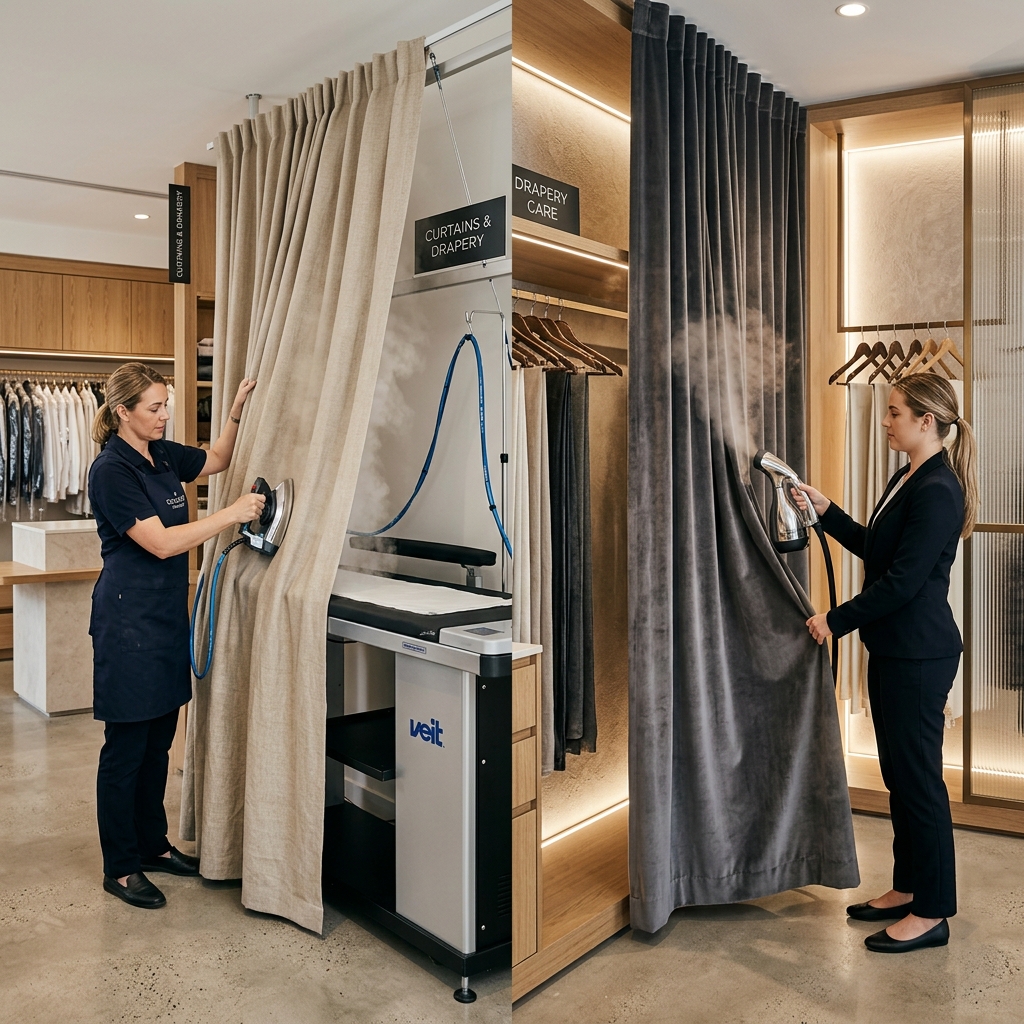
Steam cleaning, by contrast, is a wet-cleaning method that uses pressurized, high-temperature water vapor to penetrate deep into the fabric fibers. The intense heat of the steam loosens dirt, dust, and grease residues, which are then blotted away or extracted. Crucially, the extreme heat acts as an exceptionally effective natural sanitizer, neutralising dust mites, mold spores, and bacteria on contact.
The standout advantage of steam cleaning is convenience. The entire service is performed while your curtains remain hanging in place. You do not need to struggle with taking down heavy drapes, removing hooks, or transport. Steam also naturally relaxes the fabric fibers, smoothing out wrinkles and creases instantly. However, steam is not suitable for all materials. Delicate silk, lined drapes, or curtains with acrylic backing layers can be ruined by direct heat and moisture, making proper fabric identification essential before starting.
3. Direct Comparison: Fabric Suitability
Choosing between these two methods comes down to fabric composition:
- Dry Cleaning is Best For: 100 percent natural silk, wool, heavy velvet, curtains with delicate interlinings, structural buckram headers, and embroidered panels.
- Steam Cleaning is Best For: Durable synthetic fibers like polyester, nylon, thick cotton blends, heavy unlined drapes, and properties requiring rapid, high-temperature sanitisation.
Blackout Lining Warning
If your curtains feature a synthetic blackout lining or acrylic backing, proceed with extreme caution. Direct steam heat can melt or peel the acrylic coating. Similarly, certain dry cleaning solvents can dissolve or degrade the backing material. Always consult a professional care specialist to determine the safest method for lined drapery.
4. Chemical Differences: Solvent Chemistry vs Water Vapor
To understand the science behind dry cleaning, it helps to examine the solvent chemistry. Traditional dry cleaning relies on liquid hydrocarbons or siloxane-based solvents. These molecules have a neutral charge and do not bond with the hydrogen links inside natural fabric fibers like wool or silk. Because the fibers do not absorb the solvent, they remain structurally locked in their original shape, preventing fiber distortion.
Steam cleaning relies entirely on the universal solvent: water, heated to a gaseous vapor state. Gaseous water molecules carry high kinetic energy, which dissolves polar dirt bonds instantly. While highly effective for resilient synthetics, this moisture can cause natural cellulose or protein fibers to relax and shrink up to ten percent upon drying. Understanding this chemical distinction is crucial to matching the correct method to your fabric panels, ensuring that your home environment remains pristine.
5. Long-Term Fabric Life and Structural Integrity
When evaluating the long-term impact on your curtains, the cleaning method plays a major role in the lifespan of the material. Repetitive wet washing or machine spin cycles can stress delicate seams, weakening the thread lines and causing support hooks to pull out. Over time, the structural backing or interlinings can shift or tear, causing the curtains to hang unevenly.
Dry cleaning maintains the fabric dimensions perfectly by preventing fiber swelling. For heavy tapestries and custom-made drapery with integrated interlinings, this water-free method is essential to protect the thread count and weave density. Steam cleaning, when performed correctly on compatible synthetics, is also highly gentle, avoiding mechanical friction entirely. It maintains fiber relaxation without physical agitation, extending the service life of your window treatments considerably.
6. Environmental and Safety Profiles of Cleaning Solvents
Modern property owners also weigh the ecological impact of their home maintenance choices. Traditional dry cleaning relies heavily on chemical solvents like perchloroethylene, which require specialized waste disposal procedures and can leave a faint chemical smell on the fabric. However, many modern professional dry cleaners now offer green, organic solvents that are biodegradable and hypoallergenic.
Steam cleaning is inherently chemical-free, utilizing only clean water vapor. This makes it an incredibly eco-friendly and allergy-safe option for households with sensitive residents. It leaves zero chemical residue behind, which is ideal for children, pets, and individuals suffering from chemical sensitivities. Assessing these environmental profiles helps you align your cleaning choices with your household values.
7. Time, Convenience, and Cost Considerations
In terms of convenience, steam cleaning wins easily. A professional steam cleaning service can refresh all the curtains in your home in a couple of hours without any dismantling. Dry cleaning, on the other hand, typically takes several days, leaving your windows bare and compromising your privacy in the meantime. From a cost perspective, steam cleaning is often more affordable because it requires less handling and no specialized off-site chemical processing. Working with a registered professional service gives you peace of mind that the correct method is used for your home.
8. Conclusion: Match the Method to Your Needs
Ultimately, neither method is universally "better" than the other. Dry cleaning remains the safest, water-free option for delicate, premium natural fabrics that shrink easily. Steam cleaning offers unmatched speed, convenience, and sanitisation for durable, synthetic window treatments. By evaluating your curtains' fabric composition and care labels, you can choose the technique that keeps your home clean, fresh, and beautiful.